





 VocalSteamer Editorial Team

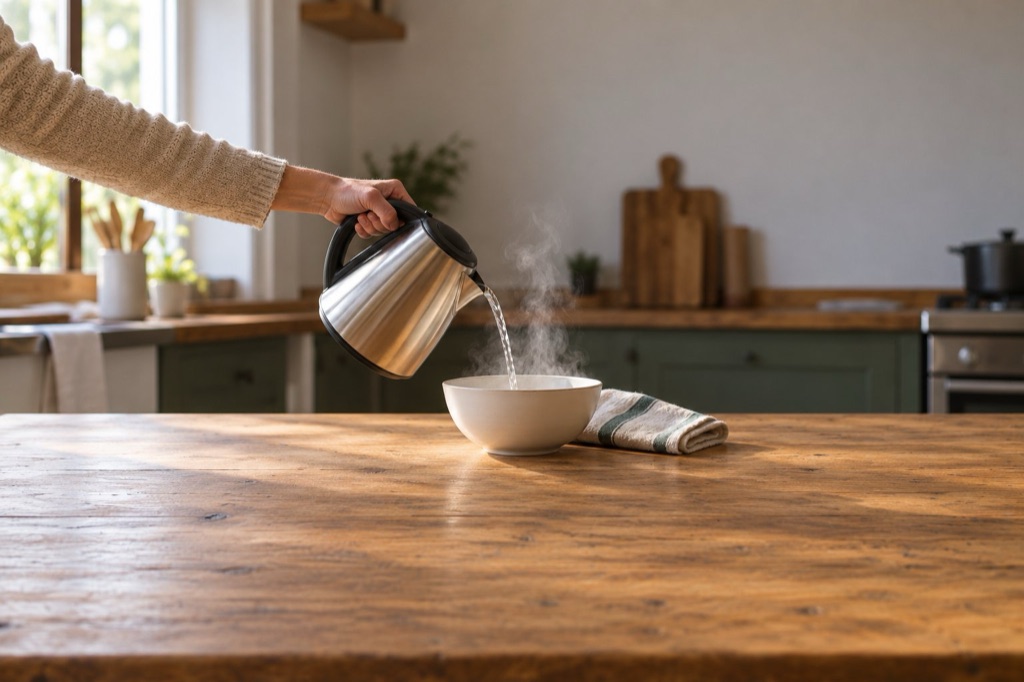


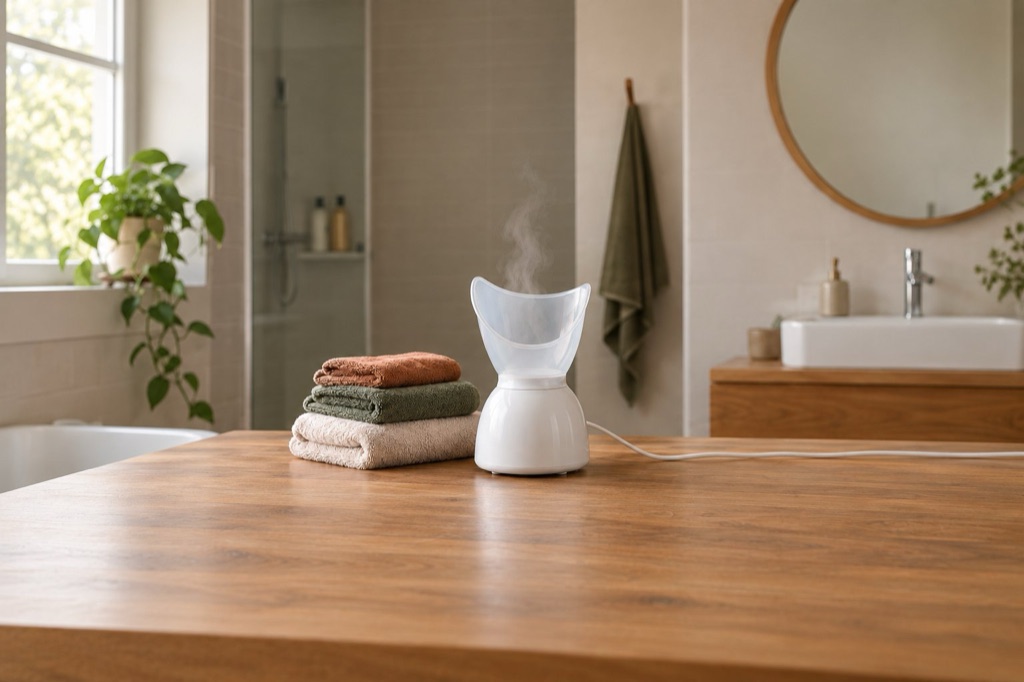

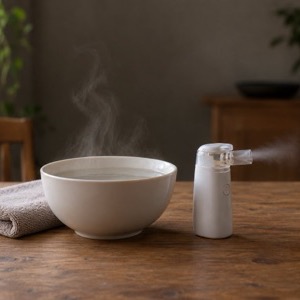
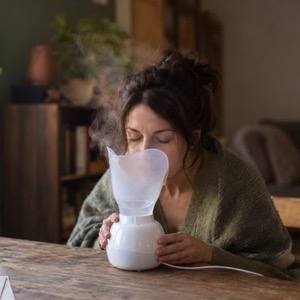
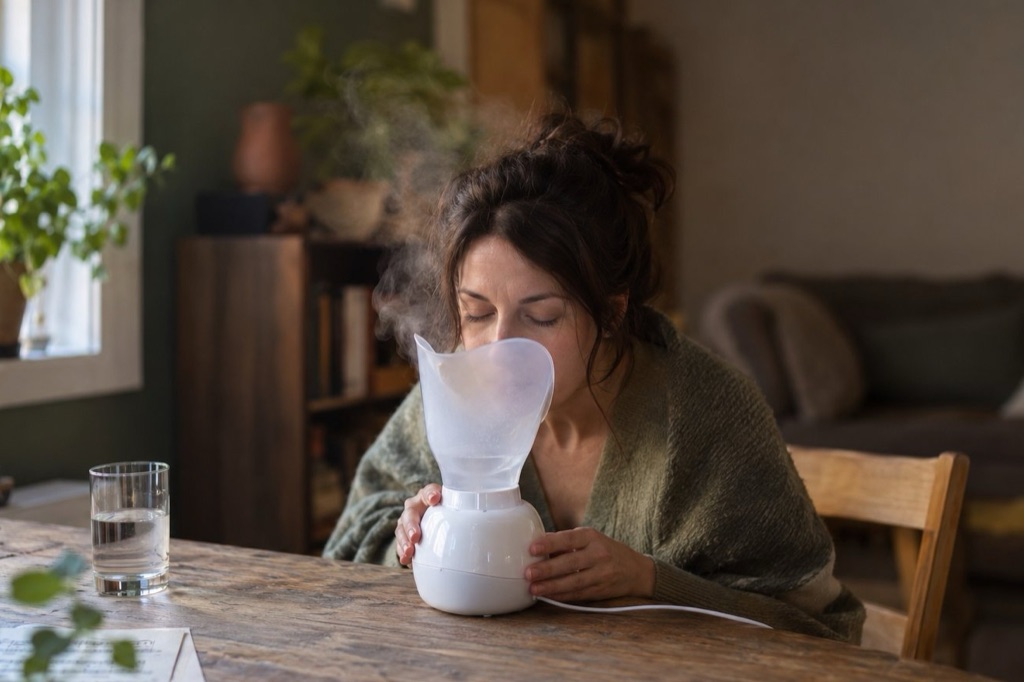
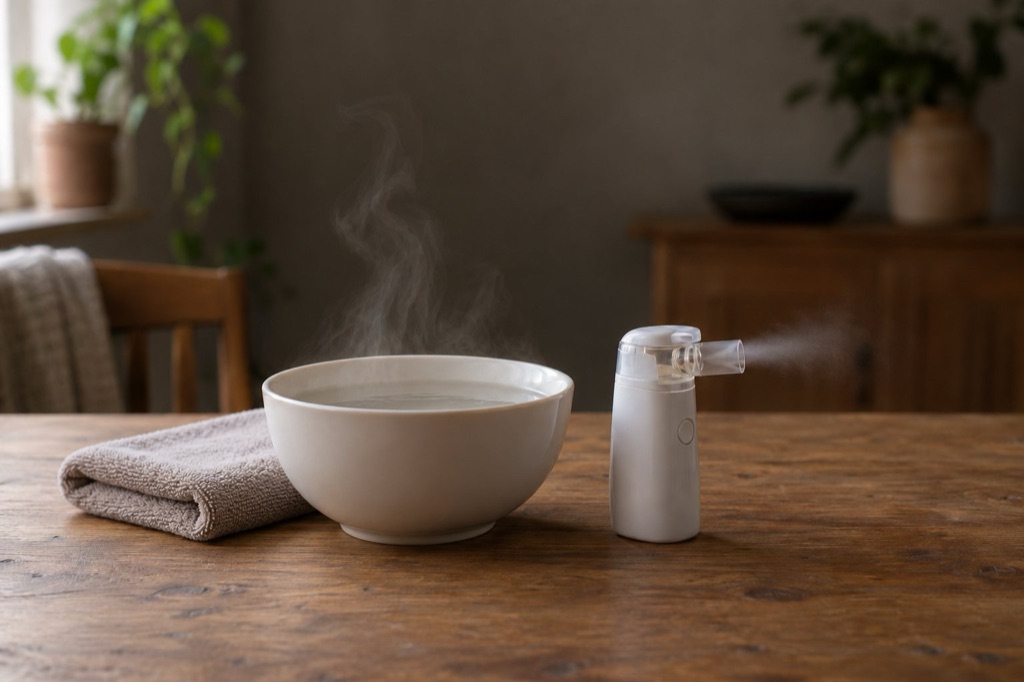
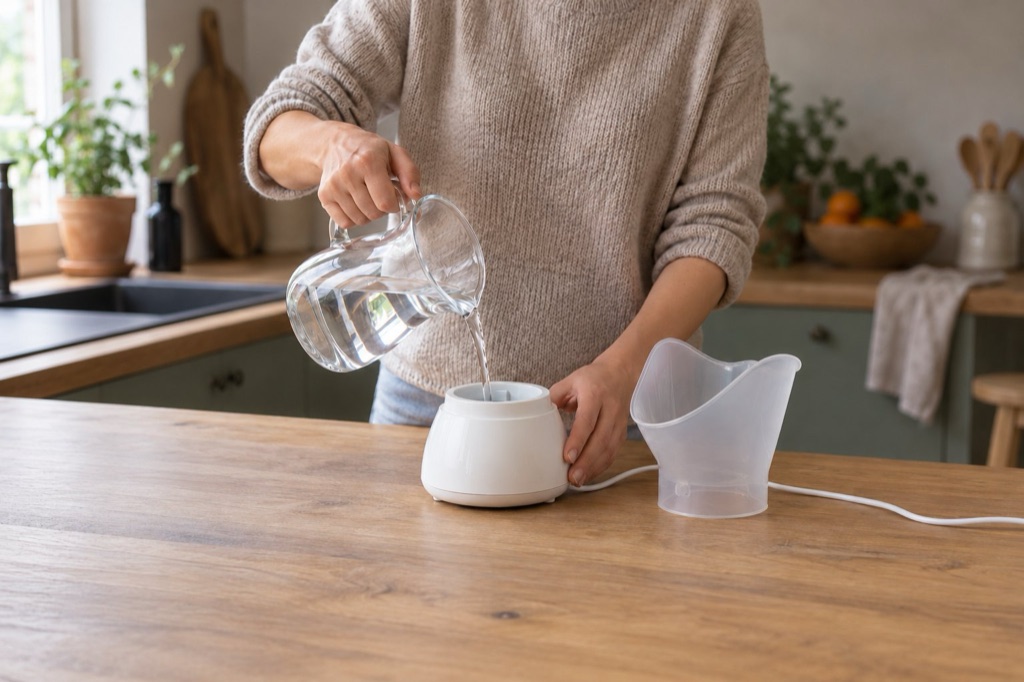
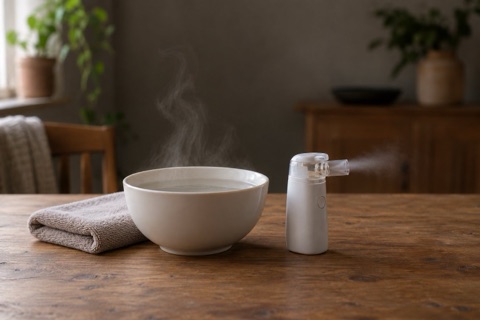
A vocal steamer is a device for breathing in warm water vapor. People steam with an electric personal steam inhaler, a steam-inhaling mug (West Suffolk's NHS leaflet), or a bowl of hot water and a towel (patient leaflets from Guy's and St Thomas' and St George's).
What the research shows and does not show
The evidence is small and mixed. In a 2016 study of 45 vocally healthy women aged 18 to 30, about 10 minutes of mouth breathing raised jitter and shimmer and lowered the harmonics-to-noise ratio; 3 minutes of steam inhaled through the mouth from a facial steamer brought those measures back toward baseline (Mahalingam & Boominathan, level of evidence 4). A 2019 systematic review reported that steam inhalation improved noise-to-harmonics ratio, shimmer and jitter (Alves et al.). In a 2022 warm-up study of 12 women, results were highly variable: of the 7 participants analyzed, steam was the best strategy for 1 and the worst for 3, who strongly disliked it (Keltz & McHenry). Both experiments were small and used 3 minutes of steam. None of this shows that steam treats a voice problem or makes anyone sing better. We found no study on how long to wait after steaming before singing; the NHS leaflets listed below do not say.
If steam makes you cough, stop and see a doctor. The NIDCD says to see one for hoarseness that lasts more than three weeks.
Who steams
In a Canadian survey of 288 professional voice users, 86% had used at least one complementary or alternative remedy for voice loss. The most common were hot drinks with honey and/or lemon, lozenges, and inhaling steam (MacDonald, You & Fung, 2024). A survey records what people use, not whether it works.
Start here
- What is a vocal steamer? Its forms, and how it differs from a nebulizer.
- How long to steam your voice: 2-3 minutes at St George's, 10-15 at West Suffolk; NHS leaflets disagree.
- Does steam help vocal cords? The studies above, in detail.
- How to use a vocal steamer: General steps, and where NHS leaflets disagree on water and additives.
- Vocal steamer vs. nebulizer: Which fits which situation.
- Vocal steamer with saline: Whether saline belongs in one. The saline studies used nebulizers.
- Portable vocal steamer: What portable means for a steamer, and where a battery nebulizer fits.
- How to clean a vocal steamer: By the manufacturers' instructions.
- DIY vocal steamer: Guy's and St Thomas' bowl method for vocal cord surgery patients (boiled water cooled a little, 5 to 10 minutes).
- Research library: Eleven studies (sample sizes, limits, PubMed links).
Sources
Study details are from PubMed abstracts retrieved October 8, 2026. The NHS leaflets were checked October 11, 2026.
- Mahalingam & Boominathan, 2016, The Laryngoscope (PubMed)
- Keltz & McHenry, 2022, Journal of Voice (PubMed)
- Alves et al., 2019, Journal of Voice, systematic review (PubMed)
- MacDonald, You & Fung, 2024, Journal of Voice (PubMed)
- Tanner et al., 2007, Journal of Speech, Language, and Hearing Research (PubMed)
- Guy's and St Thomas' NHS Foundation Trust, "Recovering from vocal cord surgery", written for people having vocal cord surgery; last reviewed March 2024
- St George's University Hospitals NHS Foundation Trust, "Voice Care", written for people with voice difficulties related to head and neck cancer treatment; published October 2023
- West Suffolk NHS Foundation Trust, "Practical voice care", issued August 2026
- NIDCD, "Hoarseness", checked October 8, 2026